Card Room Incentive Designs That Reward Protocol Adherence in Hybrid Digital and Venue-Based Events
Written by Elena Hoffmann · Sep 14, 2026

Card Room Incentive Designs That Reward Protocol Adherence in Hybrid Digital and Venue-Based Events
Card rooms have developed structured incentive programs that tie rewards directly to measurable adherence with established protocols across both digital platforms and physical venues, creating unified systems where compliance metrics determine access to bonuses, priority seating, and additional event entries. These designs emerged as hybrid events expanded in scope, requiring consistent rule enforcement whether participants engage through online interfaces or on-site terminals. Operators track adherence through integrated software that logs timing compliance, verified identity checks, and behavioral standards during transitions between digital and venue components. Points accumulate based on these logs, converting into tangible benefits such as reduced entry fees or exclusive tournament access when thresholds are met over multiple sessions.Core Components of Protocol-Based Reward Structures
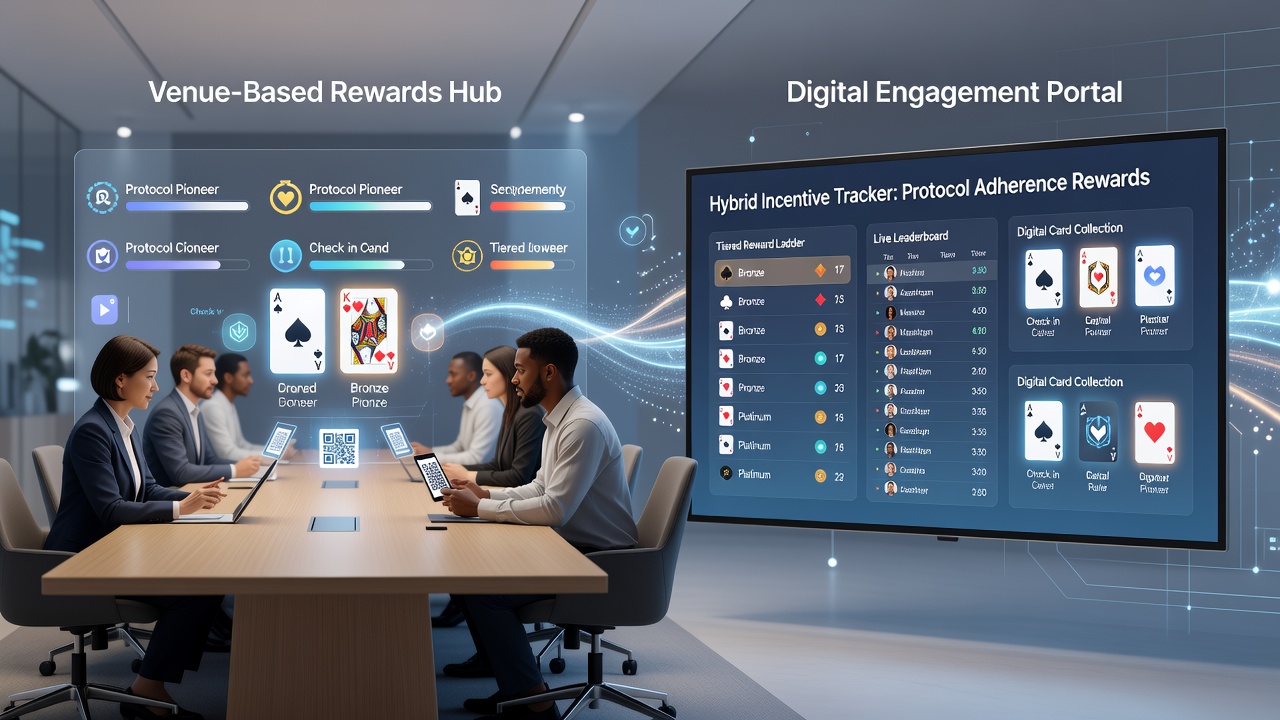
Hybrid card rooms implement tiered loyalty frameworks where protocol adherence forms the primary scoring mechanism, replacing or supplementing traditional volume-based rewards. Participants earn credits for completing identity verifications promptly, maintaining consistent connection quality during digital segments, and following venue-specific conduct guidelines during live portions of events.
Data from regulatory filings shows that systems often award multipliers for consecutive compliant events, encouraging sustained participation patterns rather than isolated visits. In September 2026 several major properties updated their tracking algorithms to incorporate real-time feedback loops, allowing players immediate visibility into their adherence scores before events conclude.Integration Across Digital and Physical Environments
Seamless data sharing between online portals and venue hardware enables unified tracking, so adherence recorded during a digital qualifier directly influences rewards available at the corresponding physical location. Card rooms achieve this through standardized APIs that sync participant profiles, ensuring no gaps appear when players shift between formats within the same series.
One documented approach uses checkpoint verification at each transition stage, granting incremental rewards upon successful completion of each protocol segment. This method reduces disputes over compliance while providing clear documentation for both participants and operators.
Examples from Established Markets
North American properties have adopted points-based systems where protocol adherence unlocks progressive benefits, such as faster table assignments or access to closed tournaments. According to Nevada Gaming Control Board records, these programs recorded measurable increases in repeat hybrid participation during 2025 and early 2026.
European operators meanwhile emphasize regional variations, incorporating local regulatory requirements into the same adherence metrics. Australian venues have piloted similar frameworks that link digital compliance scores with venue-based performance benchmarks, producing combined reward pools distributed at the end of multi-stage events.
Measurement and Adjustment Mechanisms
Operators rely on automated dashboards that aggregate adherence data from multiple sources, applying weighted formulas to calculate final reward eligibility. Adjustments occur quarterly based on aggregated performance trends, allowing card rooms to refine point thresholds without disrupting ongoing participant engagement.
Research conducted by industry analysts indicates that transparent display of these metrics correlates with higher protocol compliance rates across both digital and venue segments. Properties that publish sample calculations and historical averages report fewer appeals regarding reward distribution.
Conclusion
Card room incentive designs centered on protocol adherence continue to evolve alongside hybrid event formats, relying on synchronized tracking systems and tiered reward structures to maintain consistency across digital and physical environments. Ongoing refinements, including those implemented in September 2026, demonstrate how operators adapt these frameworks using data from regulatory bodies and operational records to sustain participant engagement while meeting compliance standards.