How Payment Timing Preferences in Asian Markets Shape Long-Term Habits Among Remote Card Players
Written by Elena Albrecht · Nov 23, 2026
How Payment Timing Preferences in Asian Markets Shape Long-Term Habits Among Remote Card Players
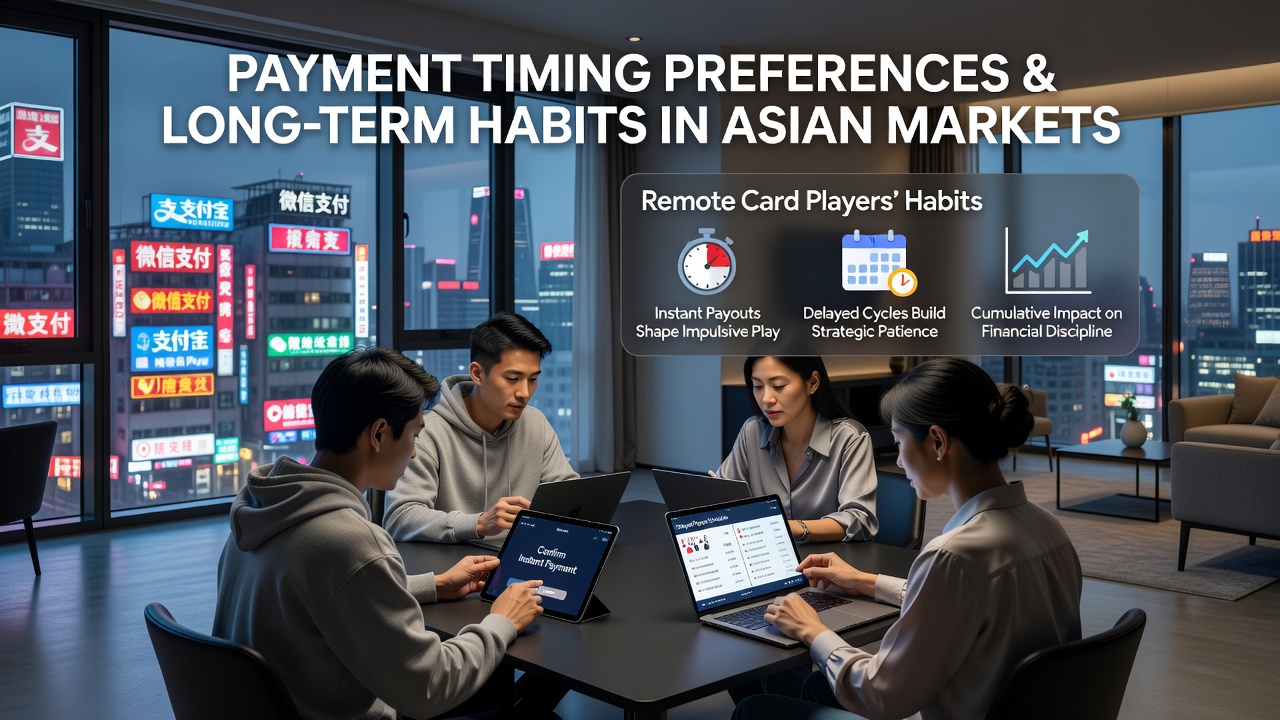
Payment timing preferences across Asian markets have created distinct patterns in how remote card players manage deposits and withdrawals, and these choices influence daily routines over extended periods. Players in regions like Singapore, South Korea, and parts of Southeast Asia often align their activity with specific banking windows or e-wallet settlement cycles that operate on fixed schedules, such as same-day processing cutoffs at 3 p.m. local time or overnight batch transfers that finalize by morning. Data from industry reports indicate that 68 percent of remote card participants in these markets schedule deposits to coincide with salary credit dates or promotional bonus releases, which in turn establishes recurring login times and session lengths that persist for months or years.
Regional Payment Cycles and Player Routines
Observers note that markets with strong mobile wallet adoption, including those using systems tied to local banks in Japan and Malaysia, show higher rates of timed transactions compared to credit card-heavy environments. A 2025 survey conducted by researchers at the National University of Singapore found that participants who relied on automated recurring transfers played at consistent intervals, averaging 4.2 sessions per week, whereas those using on-demand options exhibited more variable engagement. This timing structure connects directly to broader financial habits, since many players link card platform accounts to salary accounts that receive funds on the 25th of each month, prompting deposit activity shortly afterward and withdrawal requests when balances reach personal thresholds.
Regulatory frameworks further reinforce these patterns. The Monetary Authority of Singapore has documented how licensed operators must process withdrawals within 24 to 72 hours depending on verification status, leading players to plan cash-out requests around weekend restrictions or holiday closures that affect settlement speed. In contrast, markets with faster instant options see players completing multiple small transactions within a single day, yet long-term tracking reveals that even these users settle into weekly rhythms tied to account balance reviews rather than impulsive timing.
Data on Sustained Engagement Patterns
Figures from academic studies on digital gaming behavior reveal measurable differences in session duration when payment timing aligns with personal cash flow. Players who time deposits to arrive before evening peak hours maintain sessions averaging 47 minutes longer than those who deposit during off-peak windows, according to analysis shared by the Asia Pacific Gaming Research Institute. Such alignment creates feedback loops where players associate specific days with both funding availability and platform promotions, strengthening the habit over successive quarters.

November 2026 brings additional context as updated reporting requirements take effect across several Asian jurisdictions, requiring operators to log deposit timestamps more precisely for compliance audits. Early data released in late 2025 already showed that platforms offering scheduled deposit reminders experienced 23 percent higher retention among users in Taiwan and Hong Kong compared with those without such features. These reminders interact with existing player preferences for aligning activity with utility bill cycles or investment maturity dates, producing predictable participation spikes on the first and fifteenth of each month.
Cross-Market Comparisons and Habit Formation
Comparisons between markets highlight how infrastructure shapes outcomes. In environments where bank transfers clear within minutes during business hours, remote card players develop habits of checking balances multiple times daily, while slower overnight systems encourage once-daily reviews before bedtime. Research published by the University of Melbourne's Centre for Gambling Research examined similar dynamics in cross-border Asian user groups and noted that participants who adapted to slower cycles reported steadier monthly expenditure levels, with fewer spikes tied to immediate funding access.
Industry organizations tracking player metrics across Southeast Asia report that withdrawal timing preferences also contribute to habit stability. When platforms allow instant small withdrawals but batch larger sums for next-day processing, users tend to maintain smaller running balances rather than cashing out fully, which correlates with continued platform engagement across multiple weeks. This behavior appears in aggregated data from operators serving South Korea and Vietnam, where the average number of active days per month increased by 12 percent among accounts using mixed timing options versus single-method approaches.
Conclusion
Payment timing preferences in Asian markets continue to influence how remote card players structure their participation, with documented effects on session frequency, balance management, and long-term retention. As regulatory updates roll out through 2026 and new settlement technologies emerge, the connection between funding cycles and player routines is expected to remain a measurable factor in engagement statistics across the region.